

If you’re searching for canyoneering Kawasan Falls information before booking a trip to Badian, Cebu, here’s what actually matters: what the trek involves, how much it costs, how fit you need to be, and what a typical day looks like from hotel pickup to that last jump into turquoise water. We put this together from the questions we get most often from guests planning their first canyoneering trip.
What Is Canyoneering at Kawasan Falls?
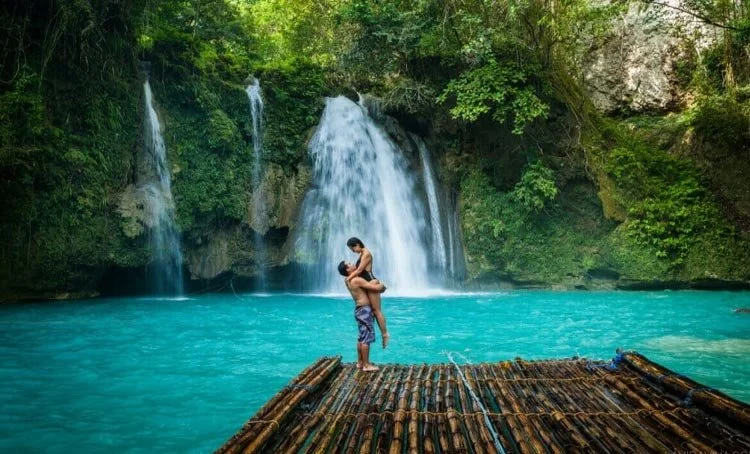
Canyoneering is essentially river trekking with obstacles. You follow a canyon carved by the Matutinao River in Badian, southern Cebu, moving downstream through a mix of hiking, wading, swimming, sliding down natural rock chutes, and jumping off cliffs that range from a few feet to well over 20 feet high. The trail ends at Kawasan Falls, the three-tier waterfall that’s become one of the most photographed spots in the Philippines.
It’s guided the entire way. A local trekking guide, trained by the Department of Tourism, leads each group, points out which jumps are optional, and knows the safest line through sections where the current gets stronger after rain. You’re never doing this route on your own.
How Difficult Is It, and Who Can Join?
You don’t need prior canyoneering experience, but a reasonable level of fitness makes the day more enjoyable — there’s a fair amount of scrambling over wet rock, and the trek typically runs three to four hours. Kids are welcome starting at seven years old, and guides adjust the pace and which jumps they encourage based on who’s in the group. The one firm restriction is that pregnant women shouldn’t join, since some sections involve jumps and fast-moving water that aren’t worth the risk.
If heights aren’t your thing, that’s fine too. Most of the jumps have a walk-around option, and your guide will never push you off a ledge you’re not ready for.
What a Typical Canyoneering Day Looks Like
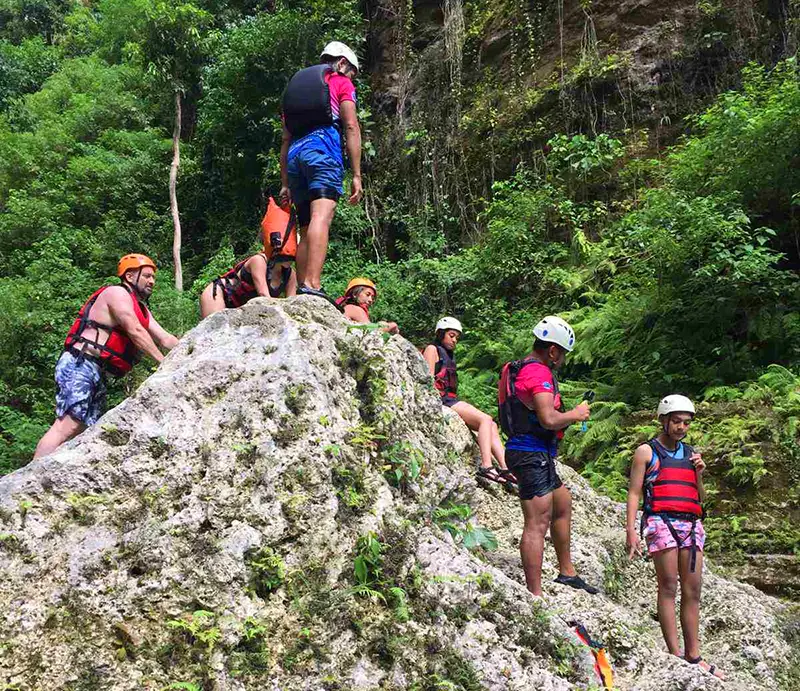
Tours usually start early, with hotel pickup around 5:00 AM for the roughly two-and-a-half-hour drive south to Badian. Most groups arrive by 7:30 AM, grab breakfast on their own near the jump-off point, then gear up — helmet, life vest, aqua shoes, and a waterproof drybag for phones and valuables — before starting the trek around 8:30 AM.
The canyoneering itself runs three to four hours, ending right at Kawasan Falls in the early afternoon. That’s also where lunch happens, along with time to swim in the falls’ main pool before the ride back to Cebu City, which usually wraps up by late afternoon. Traffic and hotel location can shift the exact times, so treat the schedule as a solid estimate rather than a fixed clock.
How Much Does Canyoneering at Kawasan Falls Cost?
Pricing is per person and drops as your group grows — solo travelers pay the most, while a group of eleven or more brings the rate down to its lowest point. A typical inclusive package covers hotel pickup and drop-off, a private guide, entrance fees, safety gear, bottled water, the short motorbike ride to the jump-off point, and lunch at the falls. The usual exclusions are breakfast, gratuities for your guide (appreciated but not required), and optional add-ons like GoPro rental if you want the jumps on video.
If you’d rather have all of that arranged for you instead of piecing it together yourself, our Canyoneering and Kawasan Falls Adventure package includes pickup, a DOT-trained guide, full safety gear, and a complimentary lunch, with rates that get cheaper the bigger your group is.
What to Bring and Wear
Pack light, since most of what you carry needs to survive getting soaked. Quick-dry clothes and swimwear underneath are the standard setup — leggings or board shorts hold up better than loose fabric on the rock scrambles. Aqua shoes are usually provided, but if you have your own pair with good grip, bring them. Reef-safe sunscreen is worth applying before you start, since you won’t get another chance once you’re on the trail. Cash is useful too, for breakfast, tips, and anything you want to buy along the way — there aren’t ATMs at the jump-off point.
Best Time to Visit Kawasan Falls for Canyoneering

The dry season, roughly November through May, gives you the most reliable conditions — clearer water, gentler current, and less chance of a tour getting rescheduled. Mornings tend to be quieter than midday, when tour groups stack up at the more popular jump spots. During or right after heavy rain, guides may shorten the route or hold off on the higher jumps altogether, since the river can rise and get faster than usual. That call is always left to the guide on site, not the schedule.
Tips for First-Time Canyoneers
A few things that make the day smoother if this is your first time:
- Don’t overthink the first jump. It’s usually the smallest one on the route, and it’s there to get you comfortable before the bigger ones.
- Pack only what fits in a drybag — phone, a bit of cash, maybe sunscreen. Everything else stays in the van.
- Book with a guide who’s DOT-accredited. It’s a river with real currents, not a theme park ride, and an experienced guide is what keeps it safe.
- Confirm your pickup time and location with your hotel the night before, since 5:00 AM starts are easy to sleep through.
Canyoneering at Kawasan Falls is tiring, occasionally nerve-wracking mid-jump, and worth every bit of it by the time you’re floating in that turquoise pool at the end. If you’d rather skip the logistics of arranging a guide, gear, and transport on your own, our Canyoneering and Kawasan Falls tour handles all of it — just show up ready to get wet.


4 Comments
Have something to add? Log in to leave a comment.